Eswatini: Mbabane, Mlilwane & Hlane
Eswatini is a small, landlocked kingdom tucked entirely inside South Africa, lying to the northeast of Johannesburg and just a few hours’ drive from the Gauteng heartland. It’s one of Africa’s smallest countries by area and population, home to roughly 1.2 million people and a GDP per capita of about USD 4,000. The country is ruled by King Mswati III,
Africa’s last absolute monarch, and while Eswatini holds parliamentary elections, its system is best described as a monarchy with limited democratic elements, political parties can exist but cannot contest elections directly, and most real power rests with the king.

Many Swazis (Eswatini was called Swaziland before) value the cultural continuity of the monarchy and love the king, and traditional structures like sibaya and the tinkhundla system remain central to national life. At the same time, there have been significant pro‑democracy movements, especially in recent years, with citizens calling for political reforms, greater accountability, and more space for opposition voices.

Flying in from Johannesburg on an Airlink flight that touched down at King Mswati III International Airport, my friend and I quickly realized we were standing inside one of Africa’s newer aviation projects, a modern airport opened in 2014, making it just about 12 years old during our visit.
The terminal, built as a national prestige project and inaugurated by the king himself, sits in the middle of quiet countryside, surrounded by rolling hills and open grassland. It felt almost surreal: a gleaming, oversized airport serving one of the world’s smallest countries.
Just outside the airport, we found a small rental desk where a compact car was waiting for us, USD 125 for three days, a simple, no‑nonsense deal that felt perfect for exploring a country this size. Within minutes we were on the road, and I was genuinely taken aback by what unfolded in front of us: modern highway signs, smooth multi‑lane roads, and lush greenery on both sides, all looking far more polished than I had expected from one of Africa’s smallest nations. It was the kind of first impression that made me feel Eswatini may be tiny, but it doesn’t feel small when you’re cruising through it.
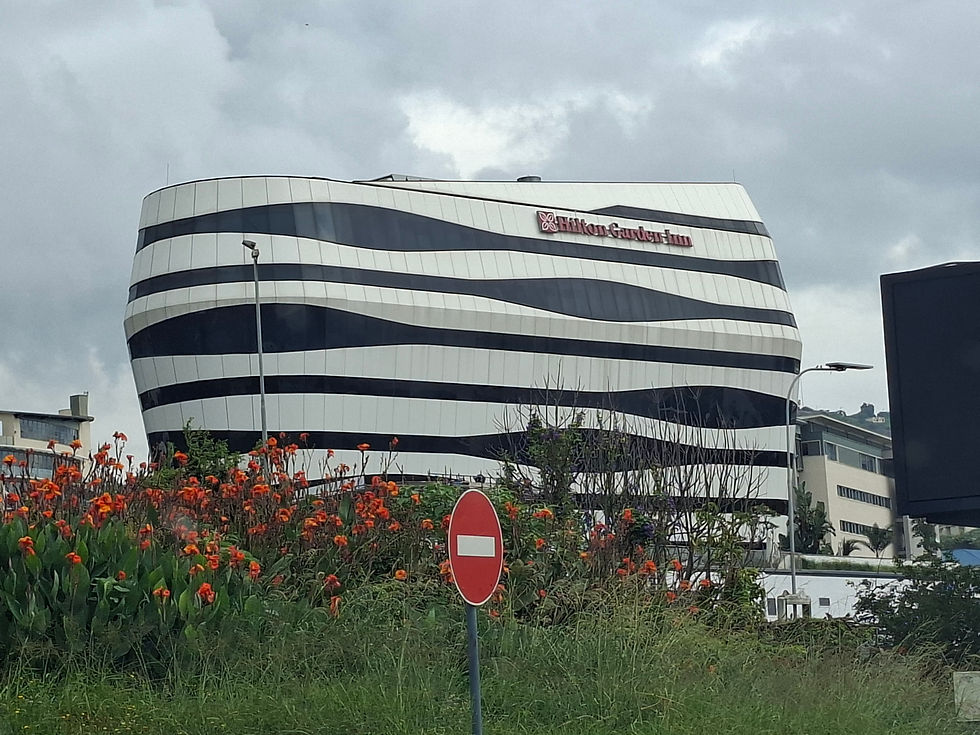
Soon had we checked into the Hilton Garden Inn Mbabane, with its striking black‑and‑white, wave‑patterned architecture that looks almost like a puzzle piece dropped into the city’s hillside. The hotel itself sits about 25–30 km (roughly an hour’s drive) from King Mswati III International Airport, and from its windows you can see the green folds of the Ezulwini Valley.
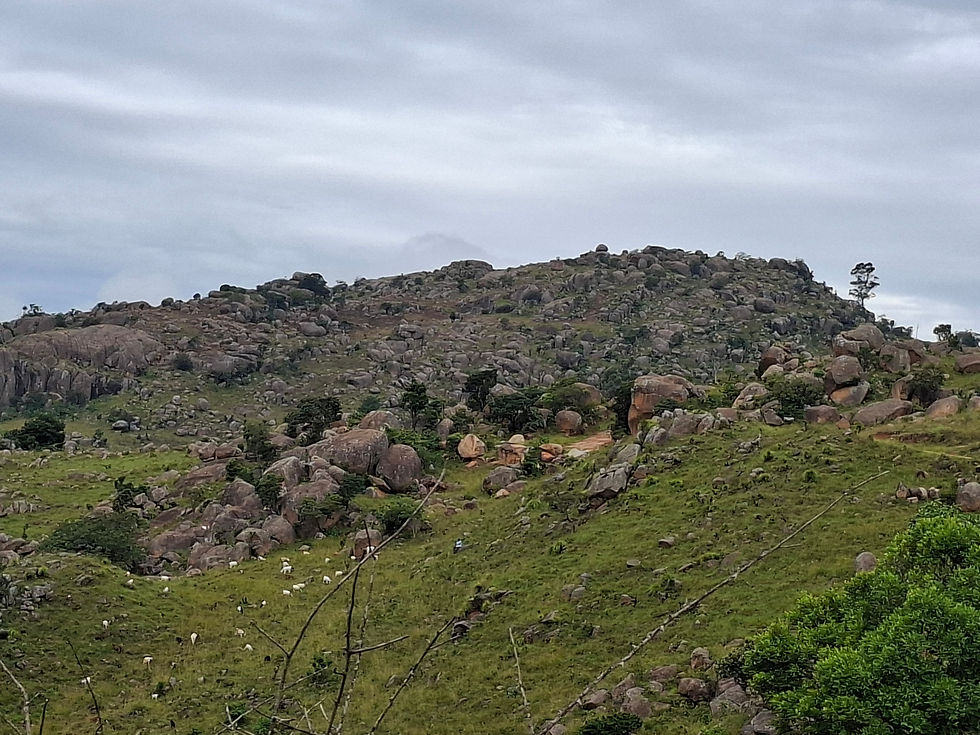
My travel companion, a firefighter from Buffalo, New York, was a man of action. Almost immediately, he was already plotting our first adventure. Within minutes, he had discovered that Eswatini hides a geological wonder, Sibebe Rock, the second‑largest exposed granite monolith in the world, second only to Uluru in Australia. Rising more than 350 m above the surrounding plains, Sibebe is a favorite local hike and a quiet symbol of Swazi endurance.

Using Google Maps, we rolled up to the Mlilwane Wildlife Sanctuary entrance, and before we had even switched off the engine, a man walked up to the car window. He introduced himself as a local guide with more than ten years of experience and offered to take us around for E 400 per person, about USD 20. We had planned to wander on our own and politely declined, but he explained that tourism had been unusually low, and he’d be grateful for whatever we felt comfortable paying. His honesty disarmed us. We agreed on E 100 total to start, with a promise to increase it if we enjoyed his guidance. It was one of those small, moments that shape a trip, a mix of negotiation, empathy, and curiosity.

He spoke with a slight slur, and at first, we wondered if he might have some personal challenges we didn’t fully understand. His clothes and shoes were worn thin, patched by time and hard use. Without hesitation, he climbed into the back seat and guided us forward, directing us onto a bumpy, boulder‑strewn track that cut through the sanctuary’s hills. The path was wild and beautiful, steep in places, scattered with huge rocks, and just dangerous enough to make us question our rental car’s suspension, but he seemed completely at home, navigating it with the confidence of someone who had walked and driven it a thousand times.

As we drove, it became clear that despite his worn clothes and quiet manner, he had a surprisingly strong command of English. He spoke thoughtfully about Eswatini’s politics, and the role of the king, whom he described with genuine affection. He told us he had seen King Mswati III a few times during public events and spoke of those moments with the kind of sincerity and pride that comes from feeling connected to a national figure.
Soon we reached the start of the hike and parked the car. The landscape around us looked almost prehistoric, massive granite boulders scattered across the hillside, dotted with hardy high‑altitude vegetation like aloes, cycads, and wiry mountain grasses that somehow manage to cling to the rock. We already had a clear view of Sibebe Rock, the enormous, exposed granite dome rising above us, and now the mission was simple: walk directly on top of it.

About an hour into the hike ang gentle climb, our guide led us to a spot he called his favorite. It was an absurdly narrow granite passage, slick with moisture, where the only way forward was to wedge ourselves between the rock walls and use a combination of legs, back, and slow shuffling to climb about 50 feet upward and nearly 200 feet sideways.

My claustrophobia kicked in instantly. Every movement felt deliberate, and every misstep carried the same thought: one mistake here and the granite below would not forgive. It was equal parts thrilling and terrifying. The reward was a beautiful panoramic view of the valley below.
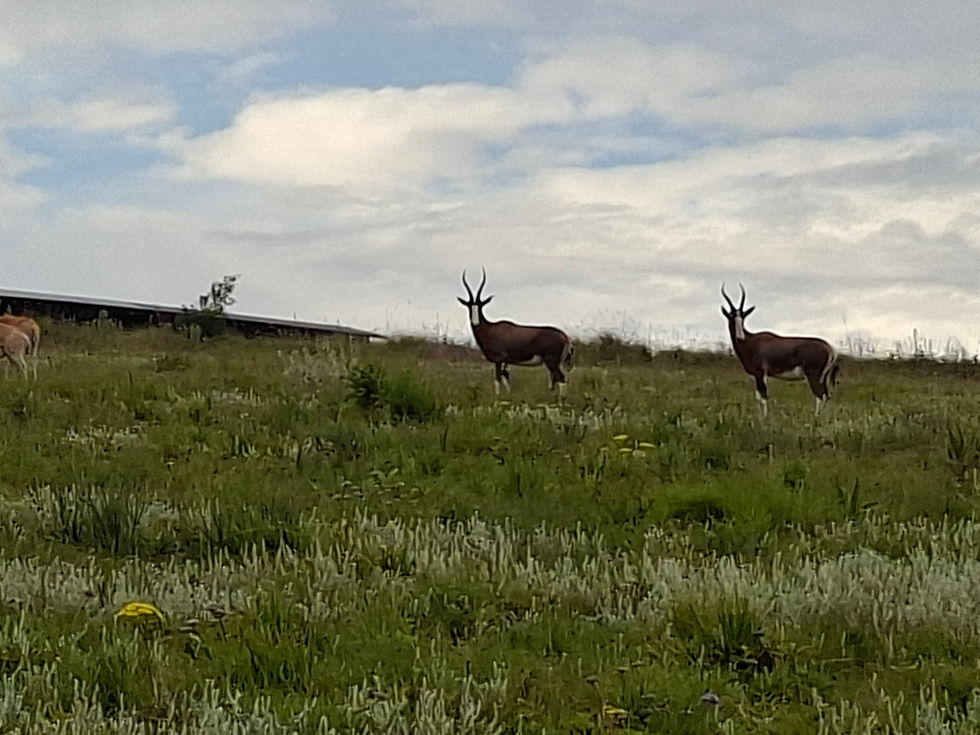
After the hike, we walked back toward the car, feeling the relief of solid ground underfoot. All around us, it seemed as though hundreds of impalas and blesbok had gathered, their alert eyes following our every step. Some stood frozen in the tall grass, horns catching the late light, while others shifted nervously, ready to spring away at the slightest sound.
I wanted to thank our guide properly, so I offered him a hiking shirt and asked if he’d like to ride with us back to the Hilton in Mbabane. He readily agreed, slipping into the car with a quiet smile. By the end of the evening, we had not only given him the shirt and his full guiding fee, but also bought him a new pair of shoes to replace the ones with holes he had worn all day.
As an extra gesture, we drove a half hour out of our way to drop him at his home so he wouldn’t have to take the bus. It felt good to close the day not just with adventure, but with a small act of kindness, a reminder that travel is as much about people as it is about places.
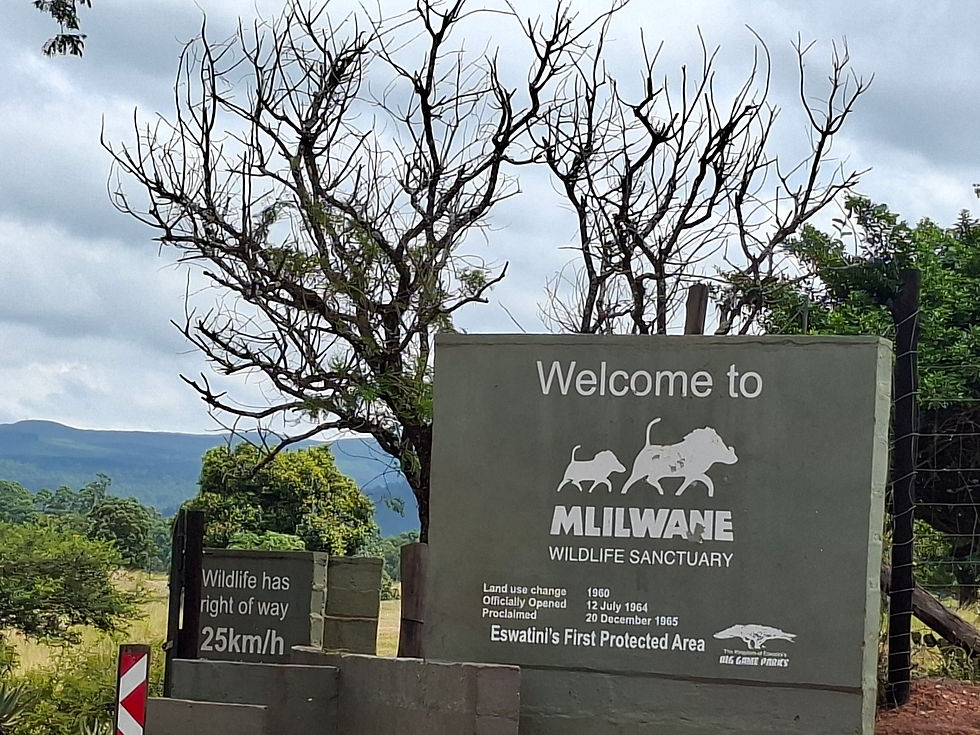
The next morning, after a sumptuous breakfast, we set out for Mlilwane Wildlife Sanctuary. What immediately struck us was how different this park felt compared to the usual safari experience. The most enticing feature was that it allowed self‑driving safaris, giving visitors the freedom to explore at their own pace. Even more remarkable, you could rent bicycles and ride alongside wildlife, pedaling past zebras, antelope, and warthogs as if you were part of the landscape. It wasn’t just a safari, it was an immersive experience.
Mlilwane truly lives up to its reputation as an outdoor lover’s paradise. With over 50 mammal species, 200 bird species, and 70 tree species, the sanctuary offers a remarkable diversity of experiences. Visitors can choose between guided or self‑guided adventures, each beginning at the Rest Camp reception, where registers and indemnities are signed before heading out into the wild.
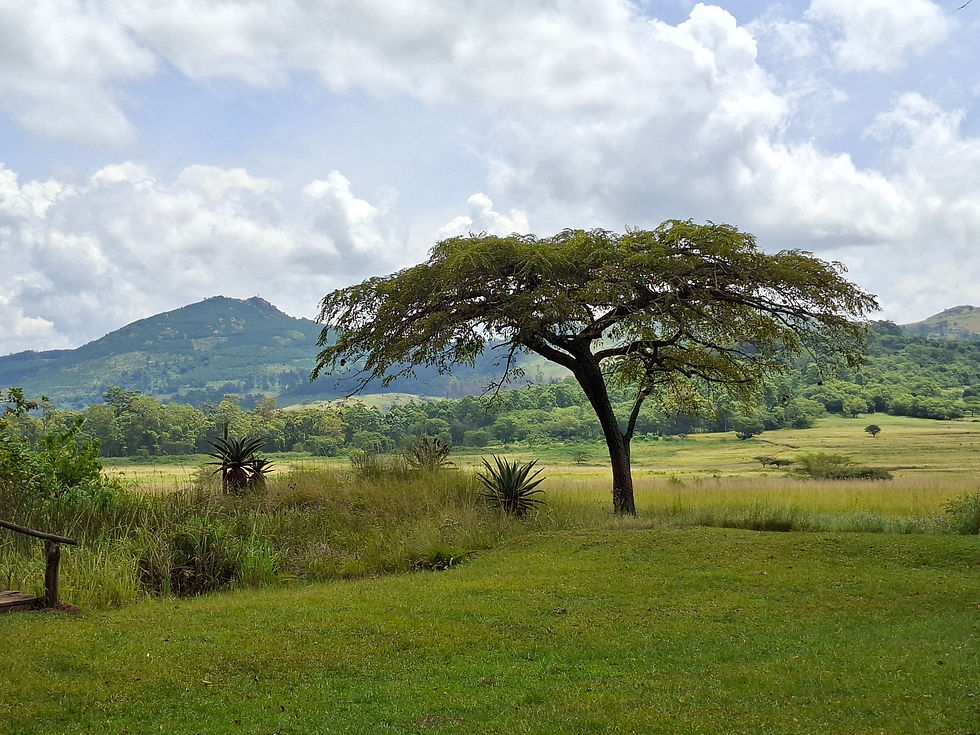
What makes Mlilwane so enticing is the sheer variety of ways to explore it. Beyond traditional game drives and sunset safaris, you can hike rugged trails like the Klipspringer or venture into caves, cycle across open grasslands, or even ride horseback alongside zebras. Cultural immersion is part of the mix too, with the Umphakatsi experience offering a glimpse into Swazi traditions
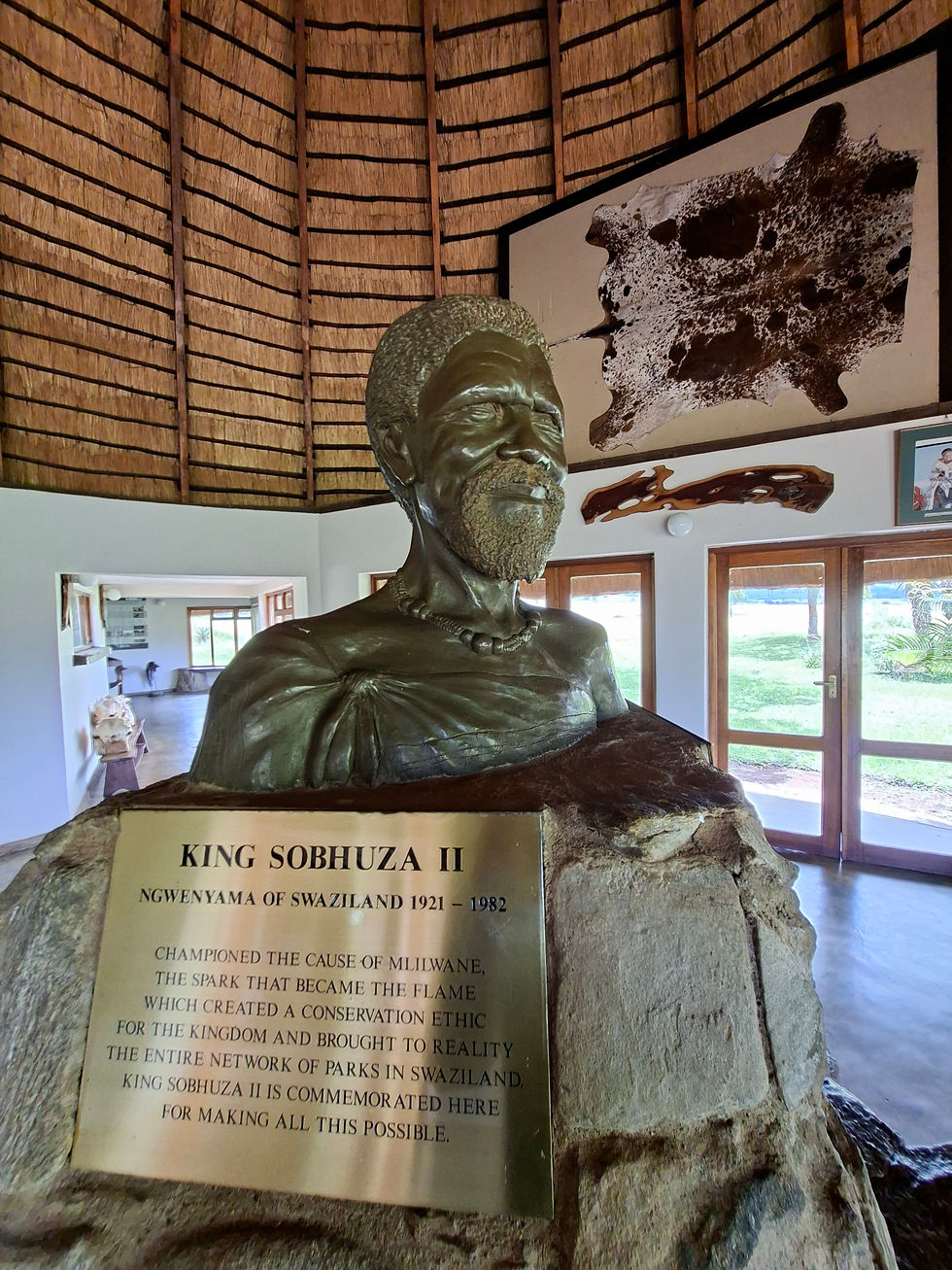
Eswatini’s wildlife conservation journey is deeply tied to its monarchy and the country’s cultural identity. In the mid‑20th century, Mlilwane Wildlife Sanctuary became the nation’s first protected reserve, founded by conservationist Ted Reilly with support from King Sobhuza II.
From those beginnings, the Big Game Parks network, Mlilwane, Hlane, and Mkhaya grew into custodians of the kingdom’s wildlife. Over the decades, they reintroduced species that had vanished locally: lions, elephants, and rhinos, all considered royal symbols in Swazi tradition.
These efforts were not without struggle; rhino poaching in particular has remained a serious threat, reflected in stark charts of losses across Africa. Yet Eswatini’s rangers, often celebrated as national heroes, have built a reputation for resilience and strict protection measures. Conservation here is a cultural mission, restoring animals that embody the spirit and pride of the kingdom.

Soon we drove to the small hut where bicycles were being rented for the riding safari. The place had a rustic charm, a few bikes lined up under the shade, their frames dusty from countless rides through the sanctuary.
After a quick test ride to check the gears and brakes, we were on our way, pedaling into the open grasslands. Instead of being enclosed in a vehicle, we were part of the landscape, moving quietly along paths where zebras grazed and warthogs scurried across the trail. It felt less like watching wildlife and more like sharing space with it, a rare kind of intimacy that only Mlilwane seems to offer.
Termites, often dismissed as pests, are in fact vital engineers of the ecosystem. Their saliva hardens soil, making it strong enough to build huts or even tennis courts, while their sudden swarms of “flying ants” create feeding frenzies for birds. In earlier times, people even earned bounties for digging out termite queens. Standing before that mound, it was clear that even the smallest creatures play an outsized role in shaping the land.

Bicycling around, admiring the lake, trees, mountains, I came back to the entrance of the park, with a few paths to take for my self-guided safari.

Near the entrance, I noticed a grim display: piles of wire snares collected by rangers. Each one had once been hidden along game paths, cruel nooses designed to tighten around an animal’s neck or leg as it struggled to escape. The sight was sobering. Even though the sanctuary felt peaceful, these twisted wires were a reminder of the constant battle against poaching, indiscriminate traps that could kill antelope, warthogs, or even livestock.
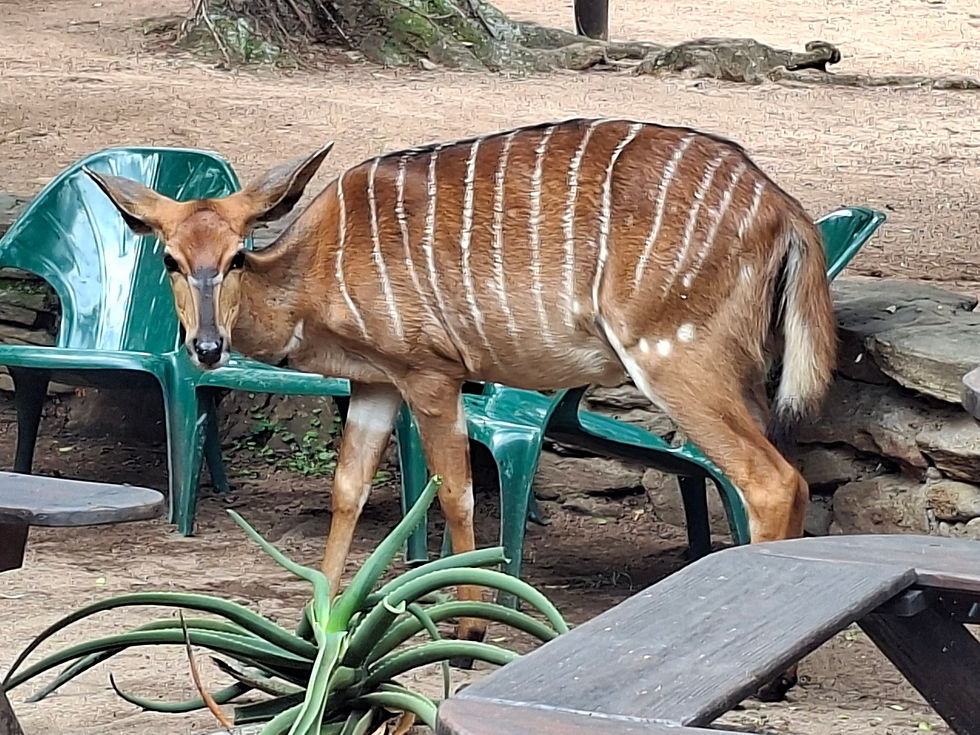
Near the picnic area, many animals wandered freely, mingling with the visitors as if the space belonged to them. Among them was a nyala, its reddish‑brown coat marked with striking white stripes, calmly inspecting me from just a few feet away. The sight of such a graceful antelope moving casually between plastic chairs and benches was surreal — a reminder that in Mlilwane, the boundary between human space and wildlife blurs.
On the muddy bicycle path, a family of antelopes stood curiously watching me. Each time I pedaled closer, they would dart a few yards away, only to stop and turn their heads back, ears twitching, as if deciding whether I was friend or foe. Sharing the trail with them felt surreal, as though the ride itself had become part of the wildlife’s daily routine.
With the giant hills rising behind us, a family of wildebeest stood grazing, their dark, heavy frames silhouetted against the green plain. They were as curious as the antelopes I had passed earlier, lifting their heads to watch me pedal by before returning to the grass. Every so often, they let out their low, grunting calls, a sound that echoed across the valley and gave the scene a primeval feel. It was idyllic, the quiet harmony of animals living undisturbed in their sanctuary.

As I pedaled further along the trail, I passed by a family of zebras, their black‑and‑white stripes striking against the lush greenery. They grazed calmly, occasionally lifting their heads to watch me with quiet curiosity. They had a steady rhythm of chewing, with occasional swish of tails flicking away flies.

Warthogs were roaming freely across the sanctuary, their tails sticking straight up like little flags as they trotted along. A few cubs scurried close behind their mother, occasionally stopping to sniff the mud or nudge each other before hurrying to catch up.

The majestic blesbok were gathered in a large group, their reddish‑brown bodies standing out against the tall grass. What made them unforgettable were their white facial markings and beautifully curled, striped horns.

Wildlife was everywhere. As I looked up into the trees, I spotted several vervet monkeys peering back at me through the leaves. Their pale fur and dark faces blended into the foliage. They sat quietly, tails dangling, a reminder that in Mlilwane, the forest canopy is just as alive as the grasslands below.

I had first seen the sausage tree (Kigelia africana) during my travels in Tanzania, its enormous hanging pods looking almost surreal against the savanna sky. Spotting it again here, in Eswatini, was like meeting an old acquaintance, branches heavy with fruit and leaves shimmering in the breeze.

The next morning, we set out long before dawn, leaving the Hilton at 3:30 a.m. for a two‑and‑a‑half hour drive to Hlane Royal National Park. The road was quiet, the sky slowly shifting from black to pale pink as we crossed the countryside. We had been told to arrive by 6 a.m. sharp for the game drive, the best time to catch the animals stirring with the first light.
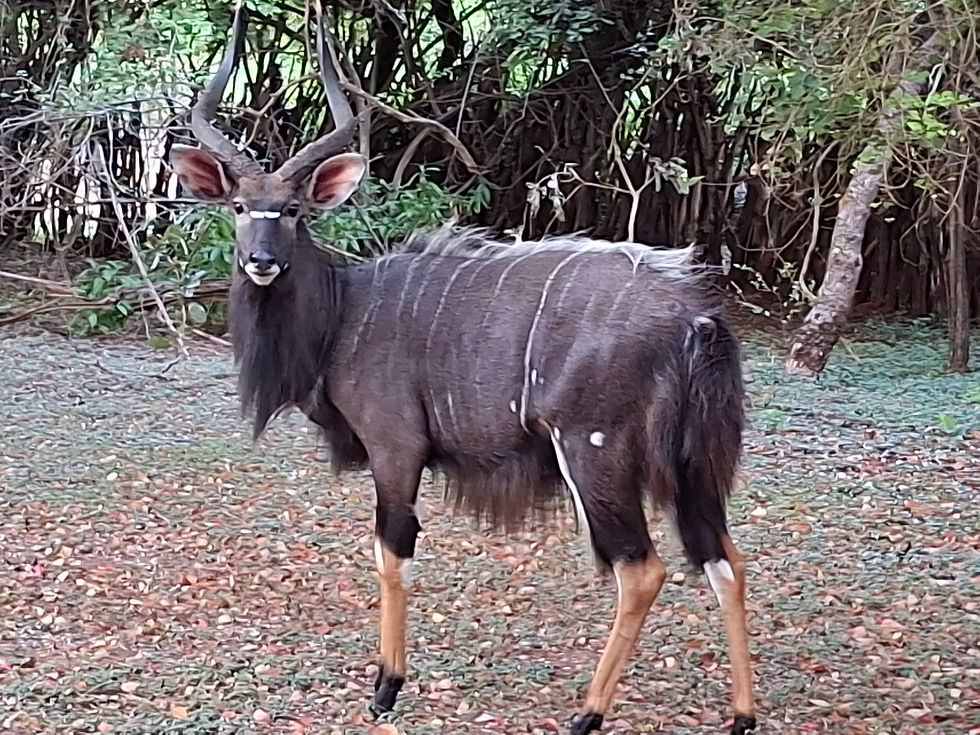
By the time we reached the park entrance, nyalas were already grazing near the roadside, their spiral horns and striped coats catching the soft morning light.

We arrived at the ticket counter for our game drive only to be told that we had to wait another two and a half hours, as the morning drive had already left half an hour earlier. The news was disheartening, it meant that the big game, especially lions, would likely be off our viewing agenda, something we had been longing to see. For a moment, disappointment hung heavy. But the ranger, with a calm smile, reassured us not to worry: in Hlane, lions are among the easiest animals to spot. His words rekindled a spark of hope, reminding us that the wilderness often has its own way of surprising visitors.
We saw many birds as we set off on our self‑guided driving safari for the next two hours. Most memorable was the lilac‑breasted roller, perched delicately on a thorny branch, its turquoise and violet feathers glowing against the morning sky. The spectacle of a safari is in the big game and also in the smaller, winged wonders that brighten the landscape.

As we drove further, we were amazed at the scene unfolding in front of us: two huge rhinoceroses with magnificent horns grazing peacefully just a few meters away. Their sheer size and presence were overwhelming, yet they moved with a slow, deliberate calm.
We were scared to move, scared even to breathe or make the slightest sound, afraid that the rhinos might charge if we irritated them. So we stopped, frozen in awe and caution. After a few minutes, our courage returned, and we inched forward, driving slowly at different angles to capture better views and photographs. That’s when we noticed the small birds perched on their backs, busily feeding on parasites in a perfect symbiotic relationship. The rhinos themselves seemed unbothered, lowering their massive jaws to the dirt before rising again to wander and graze. It was a moment of raw wilderness and harmony all unfolding in front of us.

Two hours of self‑drive later, we arrived at the ranger station for our guided game drive. The ranger climbed behind the wheel, and with just the two of us in the back, we set off. For the next three hours, he took us from one protected enclosure to another, the vehicle weaving through landscapes that seemed to hold secrets at every turn.

We saw rhions grazing together with antelopes. And then, a moment we had been waiting for. A fleeting glimpse of a lion: tawny fur, powerful shoulders, and then gone, swallowed by the tall grass. We held our breath, hoping he might reappear, but he vanished without a trace, leaving us with only the thrill of having seen him, however briefly.
It was a reminder that in the wild, sightings are never guaranteed.

The remaining time, the ranger tried valiantly to spot a lion, but the heat of the day had driven the big cats deep into cover. The vast enclosures seemed quiet, the tall grass concealing what we longed to see. We begged the ranger to add us to a trip the following morning, even though it meant a punishing schedule: leaving at 3:30 a.m., finishing the game drive by 8:30, and then rushing to the airport for our 10:30 flight to Johannesburg. But there were no available spots.
The disappointment was sharp, lions had been the centerpiece of our hopes, the symbol of the wild we wanted to witness. Yet, even in that moment, the ranger’s effort and our own persistence underscored the truth of safari life: the wilderness offers its treasures on its own terms, not ours.
The afternoon was then dedicated to Mantenga Nature Reserve, where we were introduced to the home life of multiple generations of the Swazi tribe. Their high‑energy dance performance, with men and women dressed in colorful, decorated garb, filled the air with rhythm and vitality.

We explored their traditional huts, each with designated areas for cooking and sleeping, learning how daily life was organized around family and community. The village elder’s commentary tied it all together, offering insights into customs, values, and the resilience of a way of life that continues to thrive. It was an informative and vibrant visit, a cultural counterpoint to the wildlife encounters earlier in the trip.
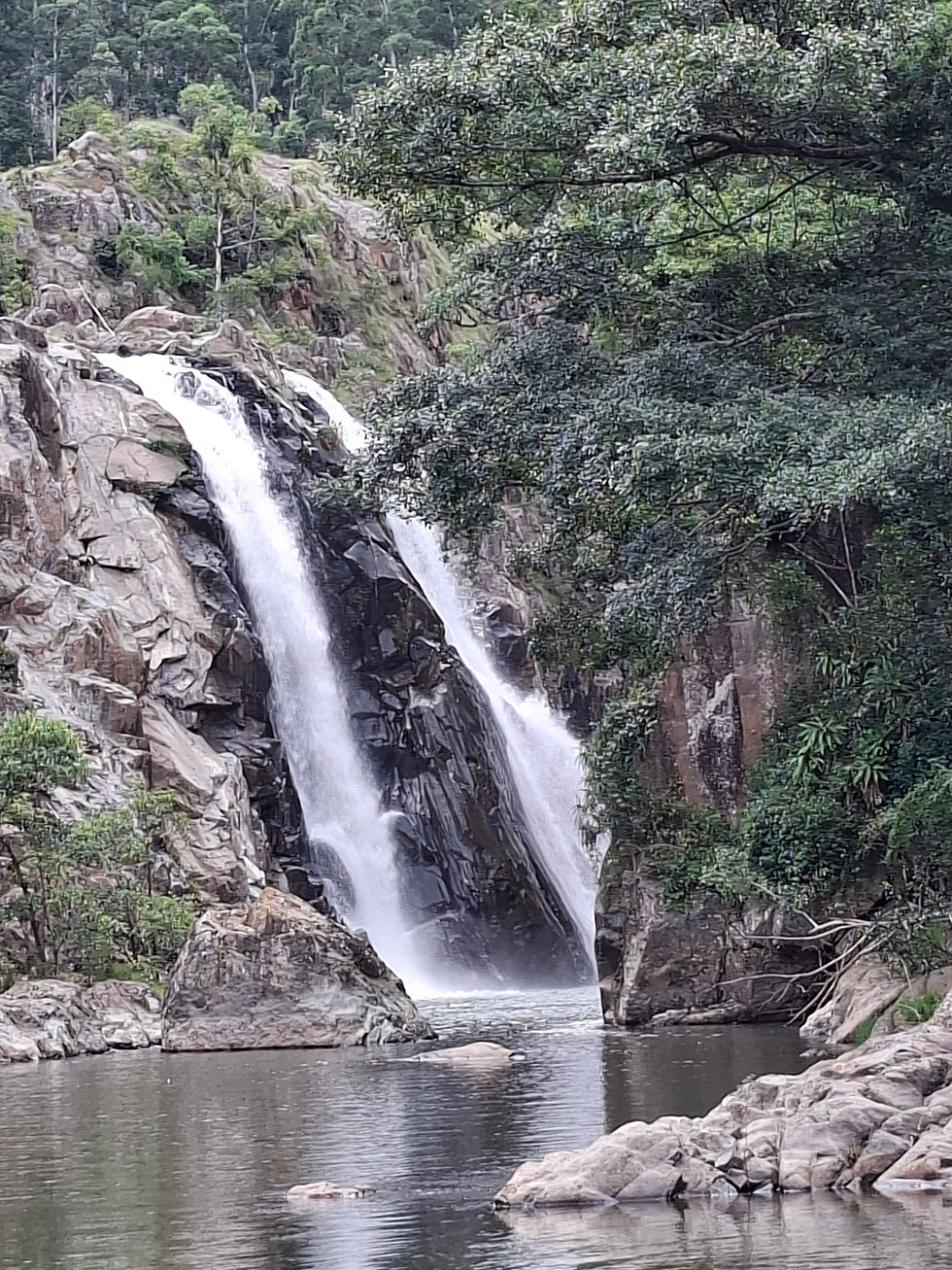
Nearby, at a distance of about 5 km, stood the Mantenga Waterfall, a dramatic cascade nearly 95 feet tall, roaring mightily as it plunged into the gorge below. The sound of rushing water echoed through the reserve, blending with the rhythms of the dance we had just witnessed.

At Hhohho, just a short drive away, we found ourselves at the lively Velvet Monkey Restaurant, a spot well‑frequented by tourists. The food was good, the music even better, and the whole place glowed with festivity thanks to its playful lighting strung across the garden. After a hearty meal and soaking in the cheerful atmosphere, it was time to retire. This time, there was no need to set an alarm for a pre‑dawn lion viewing, the lack of availability had spared us the 3:30 a.m. wake‑up call.
The visit to Eswatini was short but deeply rewarding. We had glimpsed their customs and traditions, marveled at the wildlife and natural beauty, and finally, it was time to leave. At the terminal, our waiting flight lifted us into the clouds, revealing below the intricate web of roads and paths forged over centuries. It felt like a fitting farewell, a bird’s‑eye view of a land that had welcomed us warmly.
This journey was only an introduction. The lions had eluded us, leaving a gap in the story and a reason to return. Next time, perhaps, the trip will coincide with the Umhlanga Reed Dance festival, when thousands of maidens gather in vibrant procession, and the country’s cultural heartbeat is on full display. Between the promise of lions and the spectacle of tradition, Eswatini has already written the prologue to my next adventure.


Comments